Tuesday, May 11, 2010

PROUD TO BE PINOY (AGAIN!)


Ambassador Willy Gaa was beaming when he stepped into Romulo Hall at the Philippine Embassy last Monday morning.

The Embassy staff, led by Consul General Ding Nolasco was busy preparing for the tabulation of overseas absentee votes from parts of the US and the Caribbean.

A laptop near the pantry, well-stocked with coffee, was showing ABS-CBN’s Halalan coverage live. People crowded the nook everytime it showed an update in the tally. By about 9:30 AM EST – less than three hours after the precints closed – we learned that over 30% of the votes had already been counted.

There was a cocktail of emotions in that morning. Surprise at the speed of the count, accustomed as we were to the excruciatingly slow canvass of past elections. Relief that the new automated system had apparently worked, erasing fears of another looming crisis which had preceded the May 10 polls.

But more importantly, pride that Filipinos were able to mount what could amount to a quantum leap in the evolution of Philippine democracy.

We heard about people back home waiting for hours in oppressive heat just for a chance to cast their vote. Yes, there were the usual flashpoints in Lanao or Maguindanao or Cavite but overall, there was a perception that all had gone generally well.

Past elections – particularly the 2004 national elections – were a national embarrassment. Almost everyone thought the vote was stolen and yet they were powerless to do anything about it. It only reinforced the view that in the Philippines, no candidate loses, they only get cheated.

It took courage for Filipinos to embrace the automated counting system, for them to pursue change through the ballot despite years of often violent political repression, to shake off the ambivalence springing from constant disappointment and a diet of lies and deceit.

We believe lesser mortals, pushed to such extremes, would have resorted to the barrel of a gun or worse, lost hope. And so the sight of long queues outside many voting precints was something to behold.

“Liberty,” George Bernard Shaw once wrote, "means responsibility. That is why most men dread it.”

More than the victory lap for winning candidates, the real winner in this election is the Filipino people. This is one victory we don't need Manny Pacquiao to be proud about.

If Noynoy Aquino finally inherits the mantle of leadership – tainted as it may be by his predecessor – he should realize that he had placed on himself a truly heavy burden. It is heavy because it is laden with great hope and expectation, rivaled only perhaps when his mother took over from a corrupt and bankrupt dictatorship.

His greatest challenge is to restore the Filipinos’ trust in the rule of law, a level playing field and that honest toil will be rewarded.

But that is for tomorrow. Today, we bask under a new sense of collective accomplishment.

The automated elections appear to have already brought one bright facet – the sight of losing candidates conceding within a day after polls close. No more loud charges of being cheated. This in itself, we already count as clear transformation because it hastens the healing process after the passions of political combat. Kudos to all of these ladies and gentlemen-politicians who’ve placed the interest of the nation above all others.

From there springs our hope that this augurs the return of politicians as statesmen, imperfect though them may be except only for their love of country.

Mabuhay ang Pilipinas! Mabuhay ang Pinoy!

Friday, May 7, 2010

RP POLLS: ALL'S LEFT ARE PRAYERS


After weeks of pounding the corridors of the State Department and Capitol Hill to drum up support for Philippine elections, Fil-Am leader Loida Nicolas Lewis says it now all boils down to that most primal of human resolutions – prayers.

“We have done everything we could and now it’s all up to God,” Lewis said at the conclusion of the two-day Washington Briefing for the Nation’s Catholic Community at the Trinity University.

Lewis, a staunch supporter of Liberal Party standard-bearer Benigno “Noynoy” Aquino III, has been raising the alarm about a possible failure of elections.

She echoed fears President Arroyo might sabotage the elections to keep her hold on power. Malacanang has consistently denied the charges.

But Lewis used her considerable clout as a Democratic Party stalwart in New York to alert State Secretary Hillary Clinton and dozens of lawmakers on Capitol Hill on the dangers lurking behind Monday’s national elections.

Before this, a State Department official revealed that the reports they were getting painted a different, rosier picture of the elections.

Lewis’ outspoken advocacy for Philippine elections prompted the State Department to take a second look.

She was especially critical of the automated counting machines being used for the first time in the Philippines, and was fighting for a parallel manual count.

She doesn’t believe the Commission on Elections (Comelec) is prepared to hold an automated count.

“Thank God the Supreme Court rejected the postponement of elections but we can’t do anything about the parallel count except to pray,” Lewis averred.

She will lead Fil-Ams in a prayer vigil for peaceful and honest elections on Sunday at the Lorenzo Ruiz chapel in New York.

“We will spend Mother’s Day there and stay there until midnight,” Lewis averred.

Lewis was one of the conveners of the maiden staging of the Washington Briefing, which drew previously warring political leaders under one roof.

Speakers included House Speaker Nancy Pelosi and Republic Party chairman Michael Steele.

The conference discussed a wide array of subjects, from the influence played by Catholics on the healthcare debate to the sex scandals plaguing the church to the “Catholic vote” in this year’s US midterm elections and the 2012 national polls.

WASHINGTON'S VIEW ON RP ELECTIONS


As the Philippines holds its first-ever automated elections, it seems inevitable that eyes would turn to look at the United States which continues to wield wide influence on its former colony.

Fil-Am leaders have actively courted the support of top US officials to ensure this Monday’s polls is clean, fair and credible. New York-based Loida Nicolas Lewis sought an assurance from State Secretary Hillary Clinton that the US would keep its eyes and ears open amid suspicions that President Arroyo would rig the elections to fail so she can hold on to power even after her Constitutional mandate ends in June.

An article by Mong Palatino on “The Diplomat” noted how this election cycle’s crop of candidates have embraced the message of “change” that helped catapult President Obama to the White House in 2008.

“That Filipino politicians want to adopt the styles of leadership of successful US politicians reflects the enduring power of colonialism and the hegemonic appeal of the US brand of politics,” he wrote.

That perception is fueled in part by how Philippine presidents appear to put premium on the US “stamp of approval”. That may be rooted in Philippine history as the early pillars of the Republic worked as much in Manila as the halls of Capitol Hill and the White House to negotiate the grant of independence.

The “man of the masses” President Magsaysay was said to have been an American creation. And as the masses rose up to oust the dictator Ferdinand Marcos, he took his final cue from US officials who told him “to cut and cut cleanly”.

President Arroyo underlined her American education and the fact former President Clinton was a classmate.

Perhaps more importantly, the US “stamp of approval” is as much political currency in the Philippines as it is social and economic. With about four million Filipinos in the US contributing more than half of the dollar remittances sent home to buoy up the economy, there is a critical audience that keeps a close, steady watch on the goings-on in the Philippines.

The blunt expressions of concern over the coming polls aired by some US lawmakers to the Arroyo administration is testament that Filipinos are a power bloc recognized in American politics.

Presidential candidates Gilberto Teodoro and Manny Villar gave American audiences an opportunity to size them up, trooping to Washington DC just months before they announced their candidacies. Front-runner Noynoy Aquino III admitted he was “interviewed” by US officials in Manila.

Former President Estrada may have carried that task to an extreme when overzealous aides were caught receiving classified reports from a sympathizer in the White House.

But the Obama administration has been intentionally silent, keeping a studied distance from the political drama in Manila. There is some debate on whether they had earlier misjudged the situation because of rosy reports coming from their Manila listening post.

Any notion by this or that candidate that he has America’s “blessings” is of course a figment of his imagination. If the Obama administration has any preference, it would certainly not advertise it – but one can be sure they will make it known after May 10.

America’s overriding concern is that the Philippines “not become another Thailand”, in reference to the current political turmoil in Bangkok. That much was said by Scott Thompson, a former State Department official, during a recent visit to Manila.

Former National Intelligence Director John Negroponte told us in an interview how American interests are tied up to the continuing development of Philippine democracy because it is the most effective way to preserve stability in the country and the region as well.

The Philippines and Thailand are America’s only treaty partners in Southeast Asia.

Thus, it is not as important for the United States who wins the May 10 elections as how well the people will receive the results and the eventual winner. They’re concerned about the process, not the personalities.

For the US, the real test for success or failure of the coming elections is credibility.

Thursday, May 6, 2010

FIL-AMS TAPPED FOR HUGE TRADE BILL


Trade officials are asking Fil-Ams to help push two bills pending on Capitol Hill that will boost the US textiles and Philippine garments, saving or creating thousands of jobs on both sides of the Pacific.

The twin bills – House Resolution 3039 and Senate 3170 – also known as the Save Our Industries (SAVE Act), have won bipartisan support in the US Congress.

S. 3170 was sponsored by Senators Daniel Inouye, a Democrat from Hawaii, and Christopher Bond, a Republican lawmaker from Missouri.

H.R. 3039 was sponsored by Democratic Congressman Jim McDermott of Washington, and Republican Congressman Brian Bilbray of California.

Both bills are now under scrutiny at the committee level.

Philippine Trade & Industry Undersecretary Thomas Aquino is hoping the Fil-Am community can come together and exert the political influence needed to push the bills to the floor.

“US cotton and Pinoy power could be the winning combination,” he declared after a marathon teleconference with the Fil-Am community tonight.

He stressed that the SAVE Act featured a “win-win formula” that will aid both the troubled US textiles industry and Philippine garments manufacturers.

The deal could be worth $500 million for American fabric manufacturers and the equivalent of P350 billion (based on today’s exchange rate) for Philippine apparel makers by the 5th year of implementation.

More importantly, the bill aims to save or create jobs – an estimated 200,000 in the Philippines alone – and finally give Chinese garments some competition.

The SAVE Act would grant duty-free treatment to certain apparel made in the Philippines using US-made fabrics.

The US textiles industry is being strangled by cheaper cotton from China, Australia, New Zealand, Pakistan and other producers.

It was a victim of globalization and production overcapacity. At its peak in the late 1990s, US textiles and apparel exports amounted to almost $17 billion – about a third of US revenues.

Aquino explained the Philippines enjoy a comparative advantage in “needle-work” – the high quality of workmanship.

To a large extent, the Philippines garments industry was also a victim of globalization after the US ended its quota regime and opened its markets to cheaper Chinese products as part of concessions for joining the World Trade Organization (WTO).

Aquino emphasized that the SAVE Act “is worthy of support of the Fil-Am community that wants to come to the aid of both its native and adopted countries”.

For example, he said the SAVE Act could help popular Filipino brands like Bench, Cinderella, Bayo, and others penetrate the US garments market.

Under existing conditions they will be pressed to compete in the US because tariffs could range from 15 to 34 percent.

He admitted that some of the impetus for the US bills came from American businesses in the Philippines who were reluctant to move to China despite the market imperatives.

Not surprisingly, the SAVE Act has won adherents from both US and Philippine trade groups, among them the Confederation of Garment Exporters of the Philippines, Textile Manufacturers Association of the Philippines, American Apparel & Footwear Association, National Retail Federation and US Association of Importers of Textiles & Apparel, among others.

The SAVE Act could allow the US textiles industry to carve a foothold in the Asian market through the Philippines.

Aquino, in trying to sell Fil-Ams to the bills, said they could even join the business bandwagon by buying into franchises of top Philippine garments brands that may want to take advantage of opportunities in the US.

Aquino intimated “it took a lot of pain” to convince the government to invest in a lobby group.

But working with the US Congress, getting a good lobby group is a must. They’ve selected Sorini Samet & Associates, one of only a few specialist lobbyists in Washington DC, especially in the textiles and garments sectors. Its clients include JC Penney, Polo Ralph Lauren and Ann Taylor Stores, among others.

This lobby group recently won generous garments trade concessions for quake-ravaged Haiti.

Although the SAVE Act appears to have partisan support – a rarity here nowadays – officials say it’s too small to be a stand-alone bill.

Its supporters on Capitol Hill are searching for a bill to latch it on (much like the Filipino veterans compensation bill that was linked with the stimulus bill).

Philippine commercial counselor in Washington DC Romulo Manlapig said the SAVE Act “was clearly gaining traction on Capitol Hill”.

There are moves to fold the SAVE Act in the preference reform bill which is the Obama administration’s top agenda on trade reforms.

“This is useful to boost the political stock of any administration,” Aquino averred, adding that his statement is applicable to the US as well as the Philippines, which is just days away from choosing a new president.

Saturday, May 1, 2010

HOMAGE TO ASIAN HERITAGE MONTH IN D-C


MONKEY GRASP FOR THE MOON is based on a folk tale about monkeys who try to capture the moon's reflection in a pool of water. Linking arms and tails to form a chain, they reach down from a tree branch to touch the moon's form as it shimmers on the water's surface. To their dismay the moon vanishes at the very moment they grasp it. Things we work hardest for to achieve may be just an illusion. This chain, created by Xu Bing, runs from the ceiling to a pool three storeys below, and is formed by the word "monkey" in 21 languages.


SOLON ARRESTED IN PROTEST VS ARIZONA LAW IN D-C


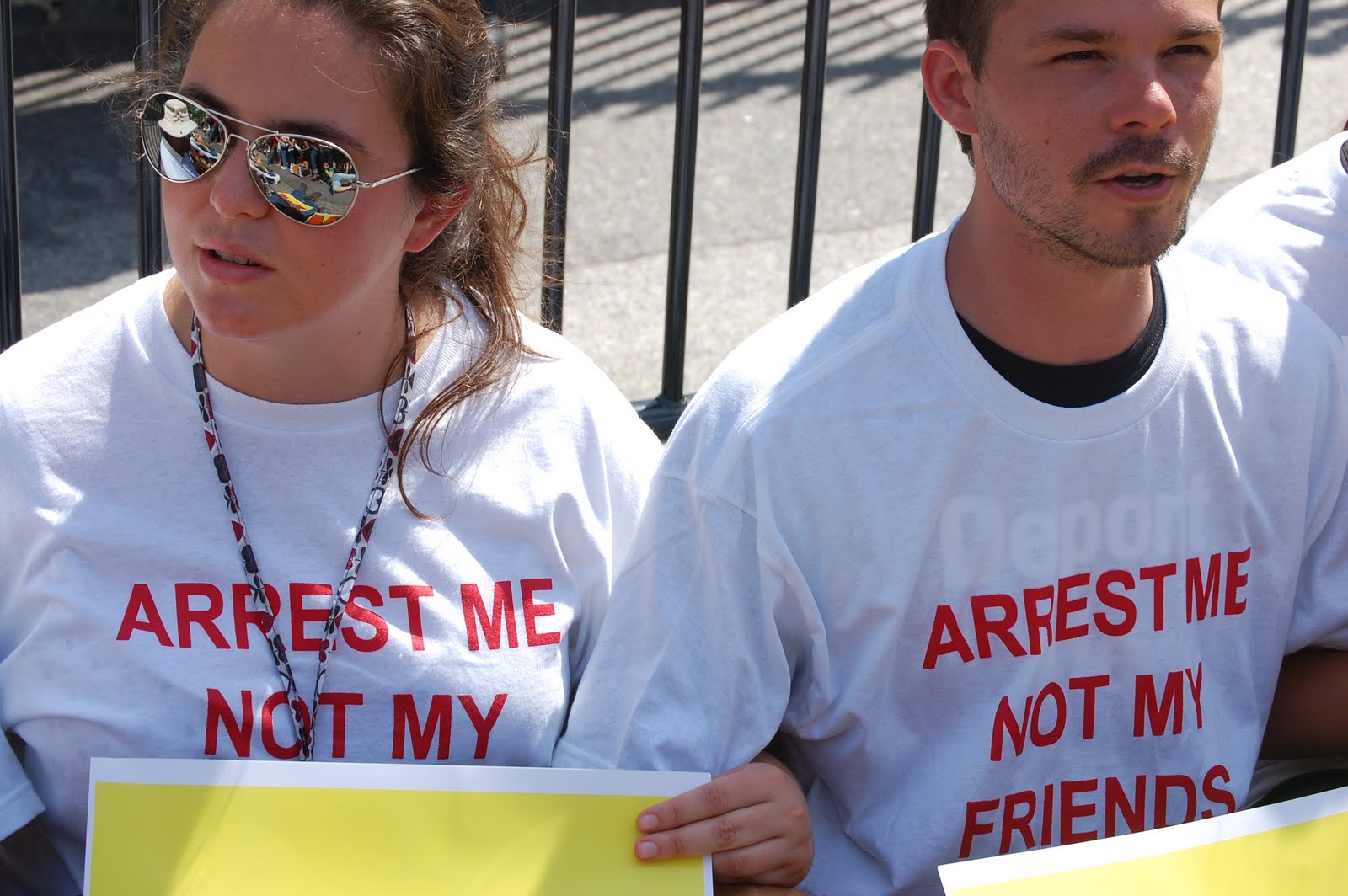
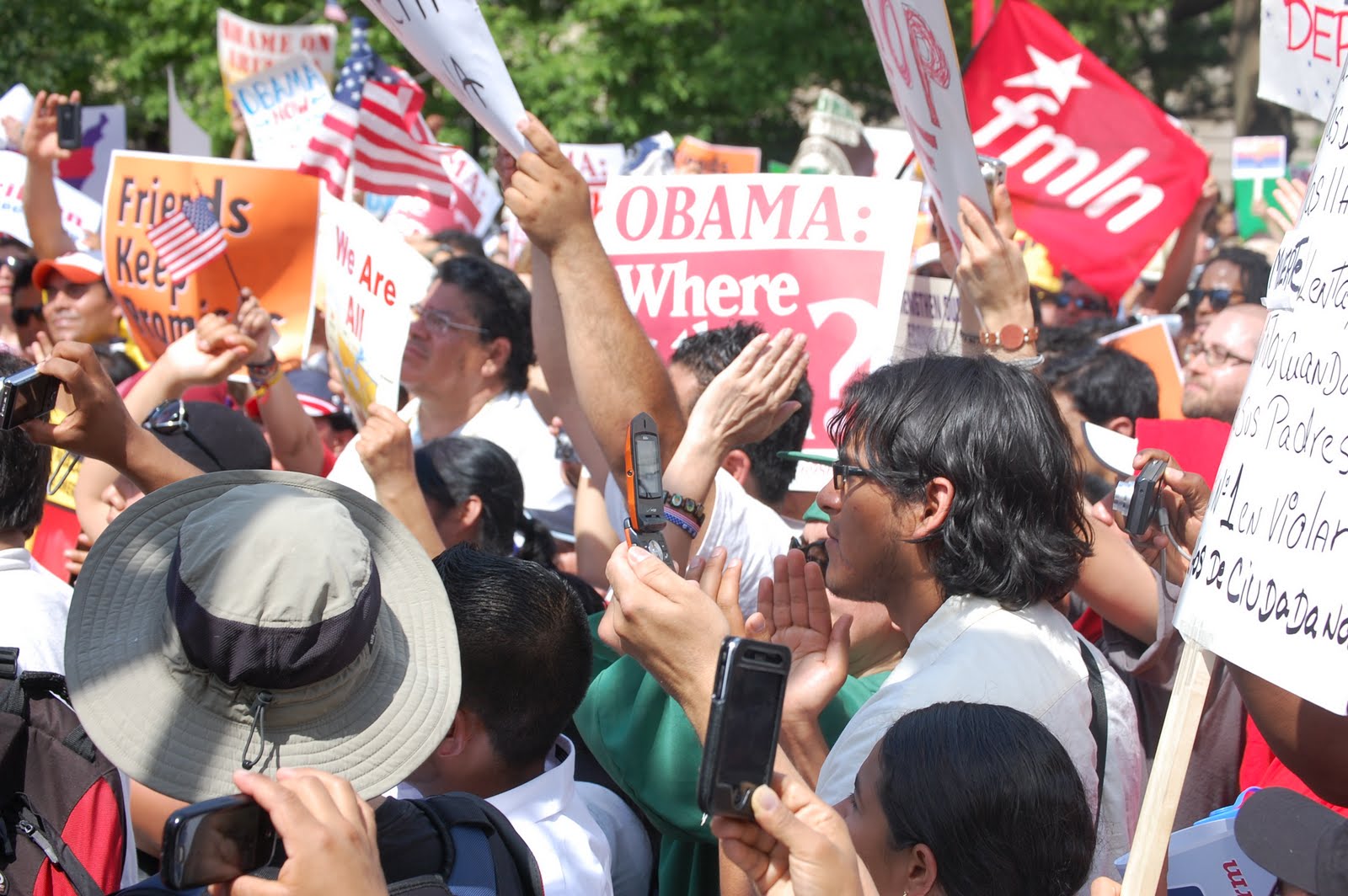
Police arrested Illinois Congressman Luis Gutierrez and 34 other protesters in front of the White House, as thousands more joined protests across the nation to denounce a new Arizona law ordering policemen to arrest suspected illegal immigrants.

The Arizona bill, also known as SB 1070, was signed into law by Governor Jan Brewer last month.

It’s drawn widespread condemnation from immigrant groups although a recent Gallup poll indicated it’s supported by a majority of Americans.


“We join the voices of civil rights leaders, constitutional scholars and legal experts across the country who’ve expressed grave concerns,” said Jon Melegrito of the National Federation of Filipino-American Associations (NaFFAA).


“This measure allows law enforcement to question anyone based on ‘reasonable suspicion’ that they may be undocumented. Even citizens and legal immigrants caught not carrying proof of their US legal status could be charged as felons,” Melegrito explained.


“This is ridiculous,” opined lawyer Arnedo Valera, executive director of the Migrant Heritage Commission (MHC).

“Under the US Constitution, immigration violation is a civil offense. What the Arizona state has done is criminalize the offense and is, therefore, unconstitutional,” he averred.

SB 1070, which won’t be implemented for a couple of months, is already facing at least three legal challenges in the courts.

Immigrant groups have gone on the offensive because other states experiencing problems with illegal immigration have signaled they may follow Arizona’s lead.


In the crowd outside the White House were about half a dozen Fil-Ams, most of whom travelled from New York.

There is a perceptible lack of appreciation among many Fil-Ams for issues surrounding immigration reforms – many see this either as a “Latino problem” or rewarding people who jump the queue while they wait as much as a decade to be legally reunited with loved ones left behind in the Philippines.

But community leaders warn Arizona’s precedent could hurt them directly.

Valera recounted instances where Filipinos, both US citizens and green-card holders, were detained aboard Amtrak trains near the US-Canada border.

From their accounts, Immigration & Customs Enforcement (ICE) agents were allegedly singling out Latino-looking individuals, and Filipinos often bear the same features.

There’s a big chance Fil-Ams will fall victim to the alleged racial profiling of Latinos.


“This law legalizes unchecked racial profiling by police and places all minorities under constant suspicion,” Melegrito said, “It instills fear and distrust in government and undermines this country’s principles of justice, fairness and equal protection under the law.”

He said SB 1070 was “a step backward and moves this great country in the wrong direction.”

“The existence of 12 million undocumented aliens, including about one million Filipinos, should not be seen as a criminal problem in the US,” Valera stressed.


Congressman Gutierrez, an 8-term Democratic lawmaker representing the Chicago district, is one of the principal authors of the Comprehensive Immigration Reform for America’s Security and Prosperity Act of 2009.

He assailed the partisan gridlock in Congress that’s blocked action on comprehensive immigration reform.

Immigrant leaders blamed the crisis spawned by Arizona’s decision to crack down hard on illegal immigration to the federal government’s failure to enact reforms.


Gutierrez reserved his most stinging attacks on Republican lawmakers, whom he blamed for the current stalemate.

He said he was letting himself be arrested to “escalate the struggle” for immigration reforms.

He also called on President Obama to use his executive powers to thwart the Arizona law, by issuing a directive to ICE not to process people arrested under SB 1070.

The National Association for the Advancement of Colored People (NAACP) – one of the most influential forces in the civil rights movement – vowed to mount a similar campaign to overturn SB 1070 and stop other states that might adopt a similar measure.

Melegrito echoed the observation that enacting comprehensive immigration reform will do away with threats like SB 1070.

“We call on our elected officials to once and for all enact an immigration reform measure that upholds our Constitution, respects civil liberties and human rights, and celebrates our nation’s values of inclusiveness, compassion and justice,” he declared.